
Most systems count how many you have. Knowledge ERP knows which ones. Every stock movement binds to a specific physical unit, so lot recalls, serial lookups, loans and audits stop being detective work.
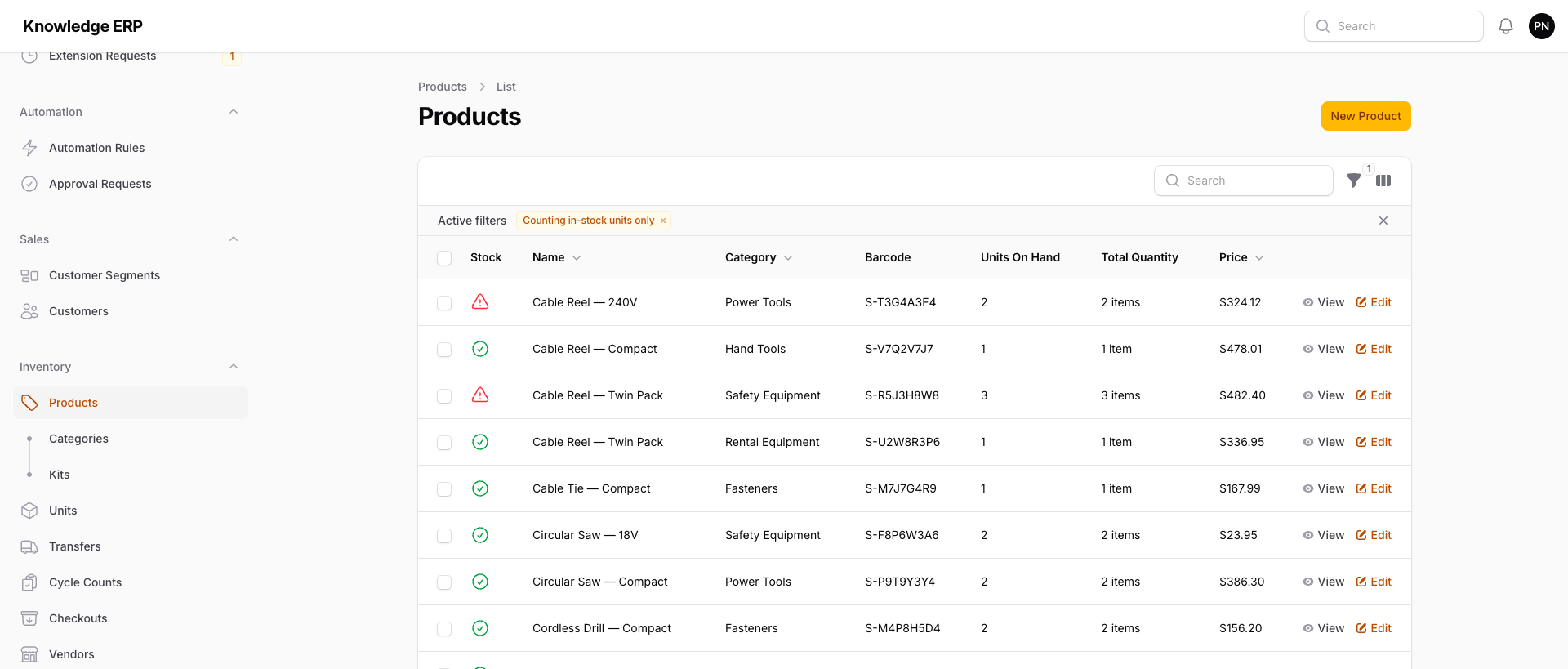
Products and units, not just quantities
A Product is the catalogue record. A Unit is the specific physical item on your shelf. Because the two are separate, you always know which exact unit shipped, was consumed in a work order, or went out on loan, and the movement log keeps the whole history with who did what and when.
Lot and serial tracking
Lot numbers, serial numbers and expiry dates on every unit, with an Expiring Stock report and alert before things go bad on the shelf.
Locations and bins
Multiple facilities with per-location settings, bins within each location, and transfers between them with in-transit tracking and expected delivery dates.
Reorder intelligence
Reorder points, two comparable suggestion engines, a reorder queue, low-stock alerts and an opt-in reorder digest delivered on the days and hour you choose.
Cycle counts
Count a slice of stock at a time with per-line variance, so audits happen continuously instead of one painful weekend a year.
Kits
Bundle products into a sellable, rentable or loanable unit, with a live count of how many complete kits your stock can make.
Barcodes and labels
Auto-generated barcodes across products, units, bins and agreements, with a printable label sheet for the shelf and the truck.
The reorder side is worth setting up properly rather than accepting the defaults: how to pick a reorder point, and why plenty of systems store one without ever telling you when you cross it.
Check-in, check-out and equipment loans
The asset management features that used to be a separate product live inside the Inventory module. Check units out to a person with a due date and a captured signature. Run free loan agreements with reserve, check out and return steps, partial returns, due-date reminder emails and borrower-facing extension requests.
- Asset checkout with signature capture and due dates
- Equipment loan agreements with reservations
- Partial returns when only some units come back
- Borrowers can request extensions without calling you
See how asset check in and check out works, including due-date reminders, overdue chasing and barcode scanning at the counter.
Works with the rest of Knowledge ERP
Inventory shares vendor records and vendor part numbers with Purchasing, feeds component units into Manufacturing work orders, reserves stock for Sales fulfilment, and backs Rentals with real availability. Stock levels sync two ways with Shopify and WooCommerce.
Different operations lean on different parts of it. Who runs on Knowledge ERP covers how trades crews, nonprofits, online sellers and lending programs each put the pieces together.
$89 a month, plus seats
Flat module price on every tier. Seats run $10 to $15 each and cover every module your account owns. A solo operator running Inventory alone pays $99 a month.
Common questions
Can I import my existing inventory?
Yes. CSV import with per-row failure reporting, so a typo on line 400 does not sink the other 2,000 rows. Custom fields import too.
Does it handle multiple warehouses?
Yes. Locations are a platform feature: distinct facilities with their own operating hours, settings and defaults, plus per-location roles so a manager in one warehouse is not an admin in all of them. Your tier sets how many locations you can have.
What about units of measure?
Units of measure with conversion factors are included, so you can buy by the case and sell by the each.